
GUOSHI ADVANCED MATERIALS
Ceramic parts
for industrial furnaces
Radiant tubes, riser tubes, protection tubes, burner tubes and refractory materials for industrial furnaces, made in Zibo, Shandong, China.
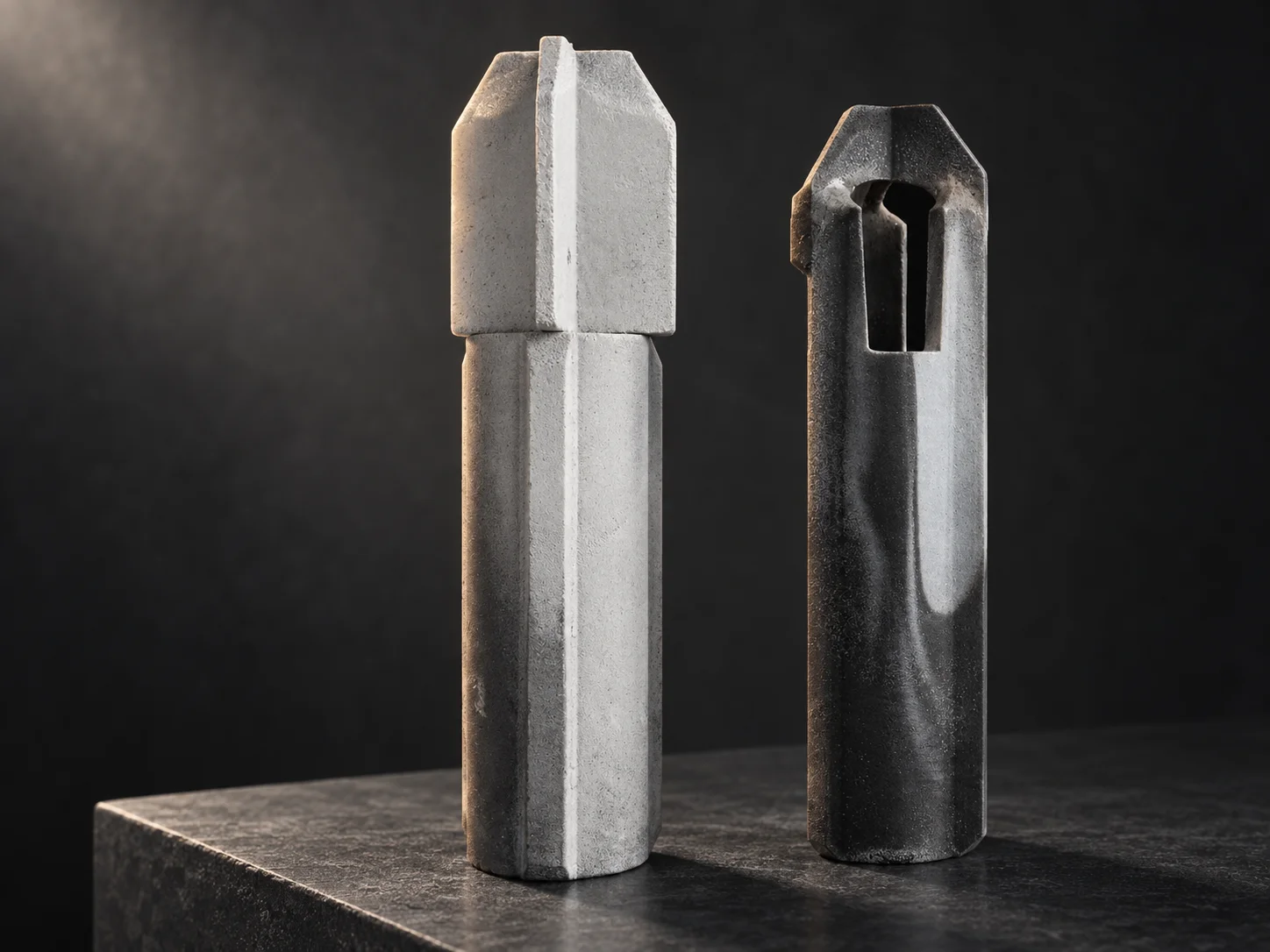
AI-assisted concept render, not a product photograph
3D PRODUCT VIEW
Turn the burner tube in 3D
An outline sketch of the burner tube. Drag to turn it and look at the octagonal body and the opening at its end.
Product details →Loading the 3D sketch…
- [email protected]
- Telephone
- +86 533 5375177
- Address
- Zibo, Shandong Province, China
- Office hours
- Mon–Sat 08:00–17:30 (GMT+8)
Industrial furnace expansion joint boards
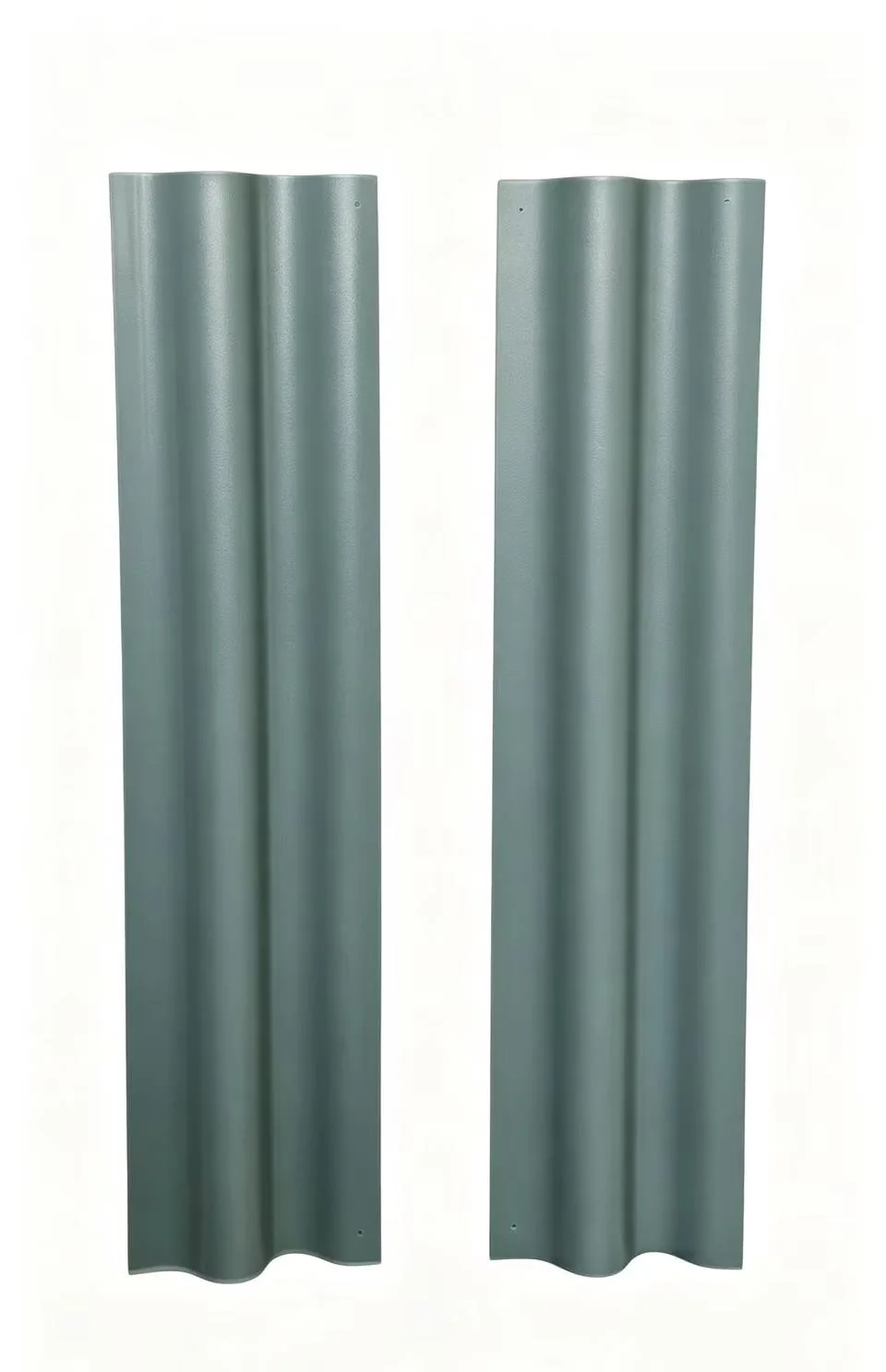
A cast refractory lining must be given a 3–10 mm expansion joint every 1.5–2 m. Cardboard or GRP corrugated board used to fill it leaves too much ash to work. This board is a PVC corrugated sheet that burns out on the first heat with about 39 % residue, leaving the joint open and the lining free to move.
Loading the 3D sketch…
The 3D view is a sketch of the outer form built from existing photographs. Dimensions and internal structure are to be confirmed against Guoshi drawings.
01 / SPECIFICATIONS
Typical properties and sizes.
| Material | Corrugated PVC sheet |
|---|---|
| Bulk density | 1.54 – 1.66 g/cm³ (GB/T 2998) |
| Vicat softening temperature | 115 – 125 °C (GB/T 8802) |
| Softening flow temperature | 190 – 200 °C (GB/T 8802) |
| Residue after burning | 38.8 – 40.0 % (GB/T 9345.1) |
| Tensile strength | 29.2 – 29.6 MPa |
| Flexural strength | 41.3 – 45.6 MPa |
| Patents | ZL 2008 2 0024444.9 (utility model) · ZL 2008 3 0162102.9 (design) |
Also known as
- Industrial furnace expansion joint boards
Names commonly used in the industry for this product and its same-material companion parts.
Range and formats
| Type | Joint width | Board height | Cut |
|---|---|---|---|
| Standard | 3 – 10 mm | To wall height | Cut to drawing |
| White grade | 3 – 10 mm | To wall height | Cut to drawing |
Design preview: specifications, suitability and supply information require confirmation before publication. Not for quotation or product selection.
Outline drawing
Sketch drawn from existing photographs, not to scale. Dimensions are shown as symbols; values follow the drawings Guoshi confirms.
02 / MATERIAL & PROCESS
Industrial furnace expansion joint boards
Patented by Guoshi in 2008 (utility model ZL 2008 2 0024444.9, design ZL 2008 3 0162102.9). It is placed in the formwork at the joint position before the castable is poured, and holds its shape and position through pouring and curing.
On bake-out it softens at 190–200 °C and burns away as the lining comes up to temperature. What remains is the joint at the width the board was, where the drawing put it. The lining expands into it instead of cracking; heat loss through the joint and the life of the shell and steelwork both improve.
- 01The joint is designed, not estimatedThe board is the joint: its width and position are set at the drawing stage, not judged on site.
- 02Little ashAbout 39 % residue against far more from cardboard or GRP, so the joint actually opens.
- 03Holds through the pourStays in place and in shape while the castable is placed and cured around it.
03 / APPLICATIONS
Where it is used.
ACastable wall, elevation
BSection through the joint
- Guoshi product
- Insulation
- Castable
- Steel shell
Sketch of typical installations, not to scale and not of a particular customer’s plant. Guoshi parts are outlined in black and marked with a red leader.
Animated sketch of typical operating conditions, not of a particular customer’s plant. Equipment and sizes are not to scale.
- 01Cast furnace walls and roofsExpansion joints every 1.5–2 m in monolithic linings.
- 02Reheating furnacesRolling-mill reheating furnace linings.
- 03Other industrial furnacesAny cast lining that needs a designed joint.
ENQUIRY
Expansion joint boards
Send the drawing, quantity or operating conditions you have, and Guoshi will reply by email.
Send an enquiry ↗